
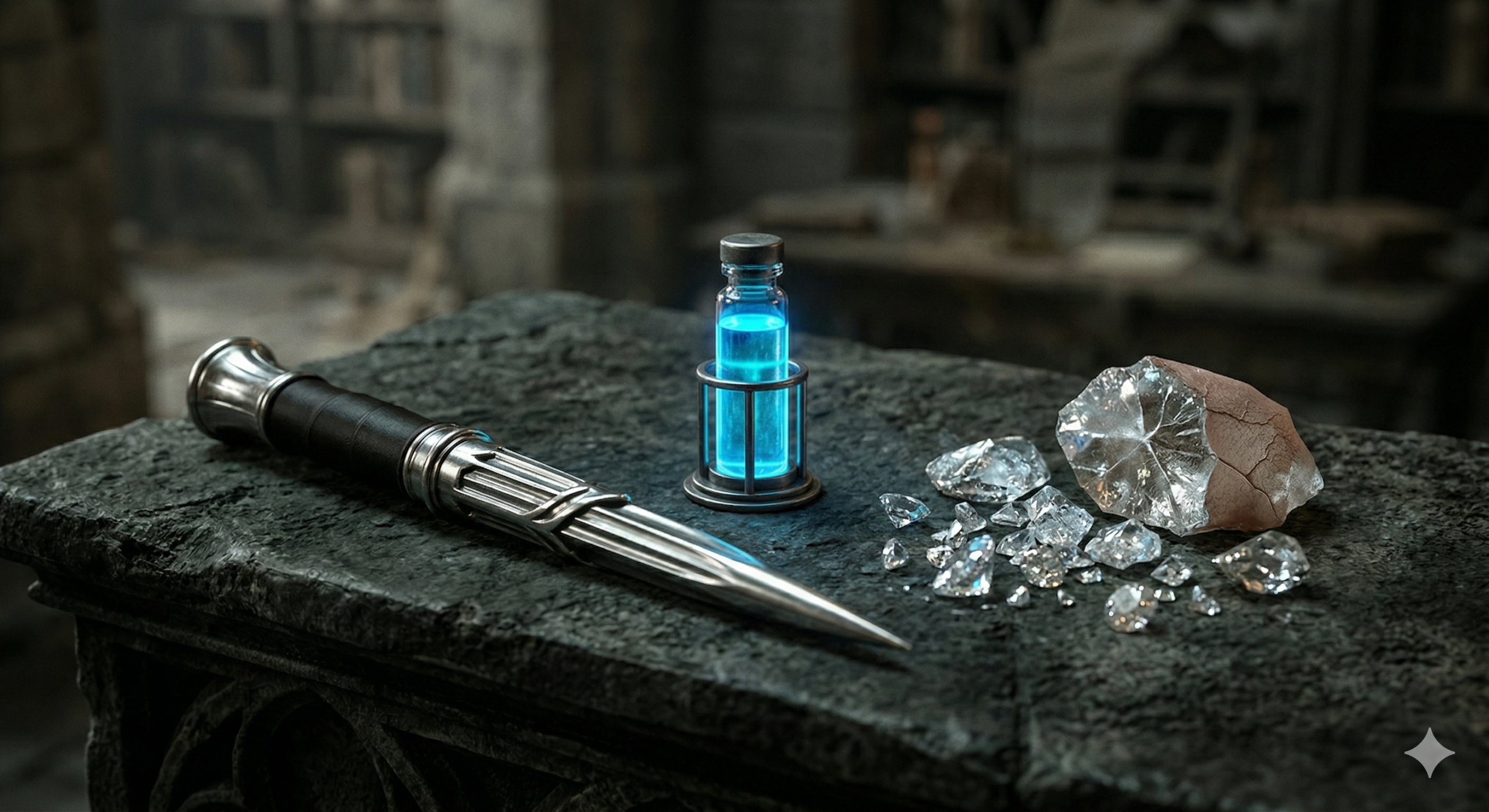
Vampirism in popular culture is not a biological constant; it is a variable that adapts to the requirements of the systemic narrative. Within the Focused Briefs archive, we classify Vampirism Rules: Blade vs Twilight as a case study in “Biological Attrition vs. Mineral Stasis.” While one system demands constant consumption to prevent a cellular collapse, the other freezes the host in a state of crystalline perfection—an immortality that is structurally flawless but logically hollow.
In this deep-dive analysis, we dissect the 5 Tragic Truths of Vampirism Rules: Blade vs Twilight, exploring the Daywalker paradox, the chemical dependency of the serum, and the “Lorentz Lore Reset” that occurs when the myth of the predator meets the science of mutation.
The Systemic Logic of Vampirism Rules: Blade vs Twilight
The primary driver between these two systems is their relationship with human biology. In the Blade universe, vampirism is a viral infection that requires constant maintenance. In the Twilight universe, it is an atomic transformation that turns flesh into a diamond-like substance. Understanding Vampirism Rules: Blade vs Twilight requires viewing these not as legends, but as competing biological architectures.
As we observed in our analysis of Capitol Arena Engineering, a closed system requires strict resource management. In Vampirism Rules: Blade vs Twilight, the resources are blood and solar radiation. For the Daywalker, light is a manageable variable under specific biochemical conditions; for the “Cold One,” light is a “De-masking Event” that reveals the non-human nature of the structure.
Structural Comparison: Attrition vs. Stasis
| Biological Metric | The Blade System (Daywalker) | The Twilight System (Cold One) | Lorentz Lore Context |
| Host Matrix | Organic Viral Mutation. | Crystalline/Mineral Stasis. | Value Zero of Humanity. |
| Light Sensitivity | Cellular Combustion (UV). | Aesthetic Refraction (Sparkling). | Failure of Systemic Mask. |
| Nutrition Logic | Serum / Human Blood. | Animal / Human Blood. | Recursive Dependency Loop. |
| Regeneration | Accelerated Healing. | Indestructible Durability. | Absolute Physical Stasis. |
| Lore Comparison | Spider-Man: Radioactive Variant. | The Night King’s True Motive. | Systemic Reset of Form. |
1. The Serum Paradox in Vampirism Rules: Blade vs Twilight
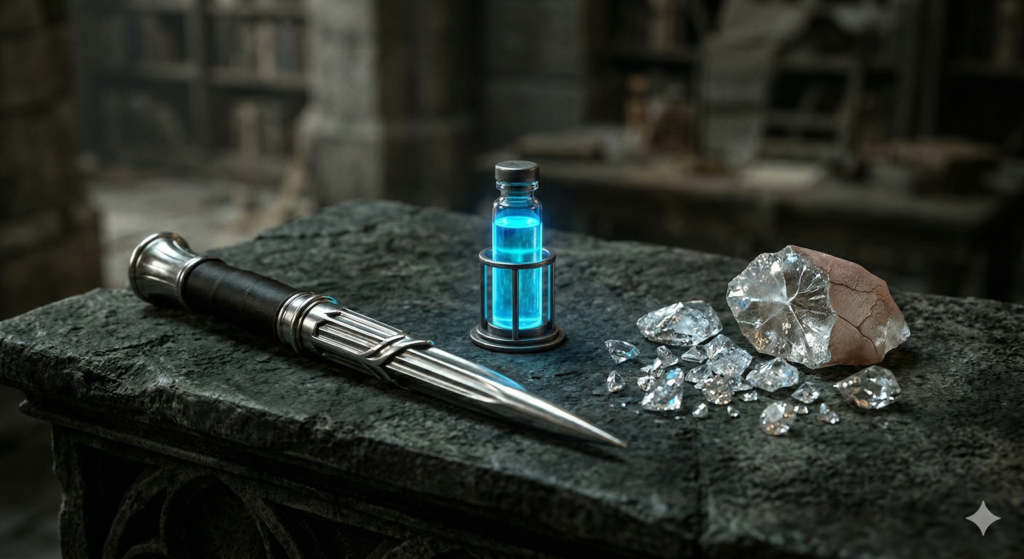
The first tragic truth of Vampirism Rules: Blade vs Twilight lies in the nature of “The Thirst.” In Blade’s system, vampirism is a degenerative disease. The protagonist is a “Value Zero” entity who must use a blue medicinal serum to suppress predatory instincts. This creates a recursive loop of pain: to protect humanity, he must inject a chemical that slowly erodes his own biology. It is a “Liquid Prison” that mirrors the biological burden we analyzed in Darth Vader: The Fall of Anakin.
2. The Mineral Stasis of the Twilight System
Unlike the organic decay seen in Blade, the Vampirism Rules: Blade vs Twilight in the Stephenie Meyer universe dictate that the body is no longer biological in a traditional sense. It is stone. They do not sleep, breathe, or age. This “Diamond Stasis” is a form of tragic immortality; the individual is removed from the flow of time and frozen in the moment of death. It is the definitive reset of identity, turning the operator into an indestructible but static object.
3. Vulnerability and the “Silver Rule” in Vampirism Rules: Blade vs Twilight
In Vampirism Rules: Blade vs Twilight, lethality is processed through opposing mechanics. In the Blade system, garlic and silver cause a violent allergic reaction at a cellular level, leading to instant combustion. In Twilight, the only way to terminate the system is physical disarticulation and total incineration. This proves that the Blade vampire is an “Unstable Biology,” while the Twilight vampire is a “Solid Structure” that requires brute force for logical cancellation.
4. The Daywalker Variable and The Lorentz Lore Reset
The “Daywalker” concept is the variable that breaks the established Vampirism Rules: Blade vs Twilight. Blade possesses the strengths of both sides with none of the weaknesses—except for the thirst. He represents the “Lorentz Lore Reset”: a new species that renders the old version obsolete. However, this advantage creates a functional isolation similar to the Night King’s True Motive, where the entity becomes a systemic anomaly.
5. The Ecology of Secrecy in Vampirism Rules: Blade vs Twilight
Finally, Vampirism Rules: Blade vs Twilight explores how these systems hide within the human network. In Blade, vampires are a global corporation, infiltrated into governments—a “System within the System.” In Twilight, secrecy is maintained by the Volturi through absolute monarchy. This demonstrates that while Blade’s vampirism is an “Urban Infection,” Twilight’s is an “Aristocratic Myth” attempting to preserve a human aesthetic long after the human core has collapsed.
Technical Archive Notes & Cross-References
- Lore Context: The divergence between biological horror (Blade) and modern gothic stasis (Twilight).
- Internal Link 1: The biological burden of mutation in Spider-Man: The Radioactive Variant.
- Internal Link 2: Systematic biological erasure in Darth Vader: The Fall of Anakin.
External Resource Records:
[Twilight Saga Wiki]: Analysis of the physical properties of the “Cold Ones”.
[Marvel Wiki]: Detailed logs on the physiology of Blade and the vampires of the Marvel Universe.

“Luiz Augusto Rodrigues is a dedicated researcher of legal structures and a published author with multiple titles available on Amazon. Specializing in the intersection of jurisprudence and narrative theory, he explores the complex ‘fictional laws’ that govern pop culture and gaming universes. As the lead analyst at Focused Briefs, Luiz leverages his academic background in law to provide deep, structured insights into character origins and mythic world-building, ensuring every brief is grounded in rigorous analysis and literary expertise.”