
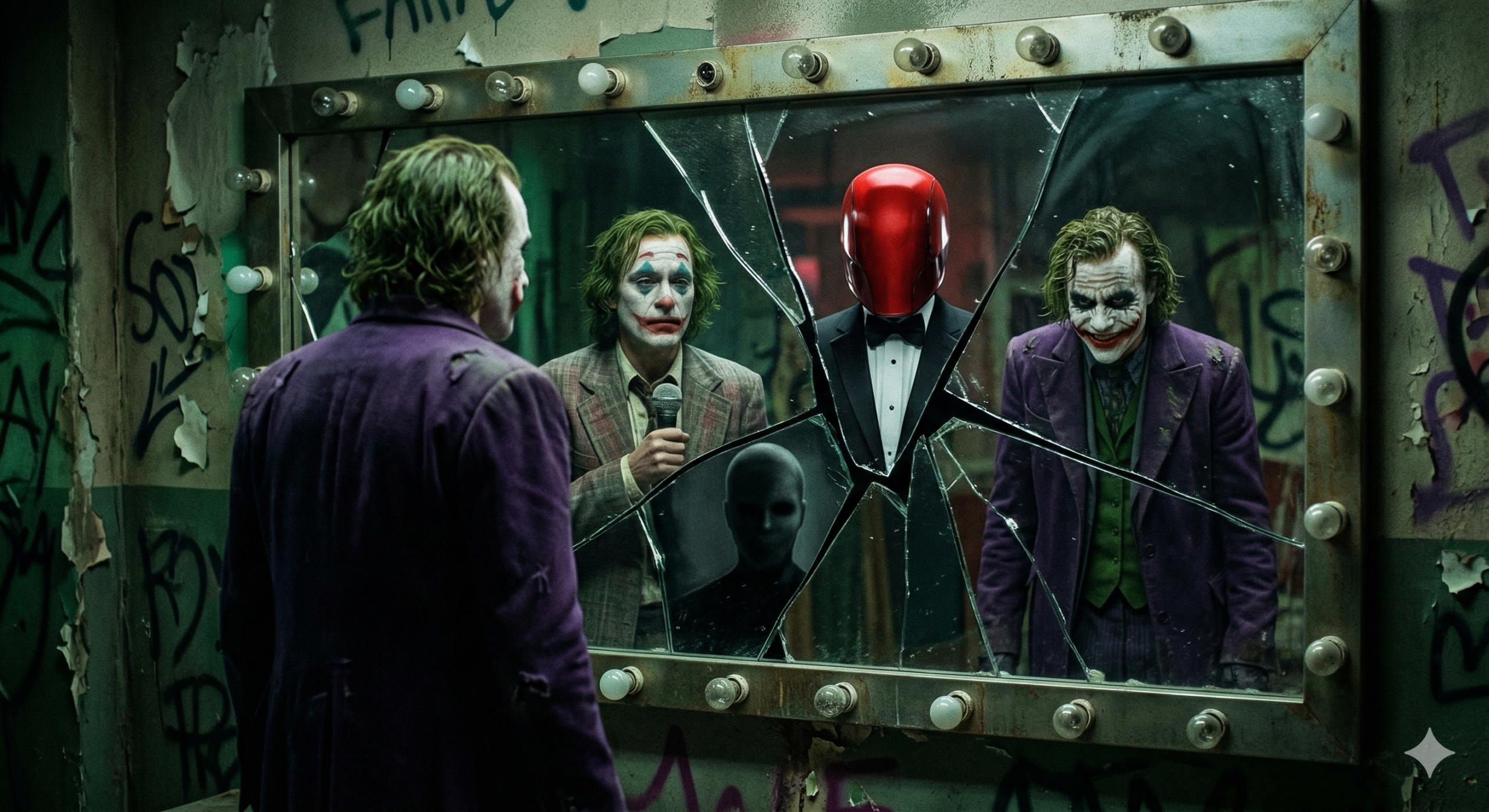
The Joker: Multiple Choice Past Theory represents the ultimate systemic refusal of a fixed identity. Within the Focused Briefs archive, we classify the Joker not as a character with a history, but as a “Value Zero” entity that weaponizes memory to destabilize the social and psychological order of Gotham. By claiming that his past is “multiple choice,” the Joker ensures that no “Origin Node” can ever be used to neutralize or humanize his chaotic influence.
In this deep-dive analysis, we dissect the 5 Tragic Truths of The Joker: Multiple Choice Past Theory, exploring the fragmentation of memory, the “One Bad Day” protocol, and the systemic recursion of a villain who exists outside the laws of biological continuity.
The Systemic Logic of The Joker: Multiple Choice Past Theory
The primary driver of this theory is the rejection of the “Lorentz Lore Reset.” Most villains are defined by a singular trauma—a point where their ancient days yielded to a dark Fourth Age. However, The Joker: Multiple Choice Past Theory dictates that the Joker has no singular point of origin. He is a recursive loop of tragedy that rewrites itself to suit the psychological destruction of his current target.
As we observed in our analysis of Capitol Arena Engineering, an environment can be engineered to force specific outcomes. In The Joker: Multiple Choice Past Theory, the Joker engineers his own history to ensure the environment (Gotham) remains in a state of perpetual entropic collapse.
Narrative Fragmentation: The Joker’s Identity Metrics
| Metric | Standard Origin (e.g., Batman) | The Joker: Multiple Choice Past Theory | Lore Impact |
| Origin Point | Fixed (Crime Alley). | Fluid/Fragmented. | Total Narrative Instability. |
| Driver | Justice / Trauma. | Pure Entropy / Value Zero. | Systematic Cancellation of Order. |
| Memory State | Persistent / Linear. | Multiple Choice / Recursive. | Erasure of the Human Core. |
| Systemic Risk | Predictable Heroism. | Unpredictable Chaos. | Lorentz Lore Reset Failure. |
| Reference | Darth Vader: The Fall of Anakin. | The Night King’s True Motive. | Recursive Narrative Loop. |
1. The Erasure of the Human Node in The Joker: Multiple Choice Past Theory
The first tragic truth of The Joker: Multiple Choice Past Theory is the complete deletion of the original human identity. Whether he was a failed comedian, a mob enforcer, or a victim of a “One Bad Day” protocol, that original version is effectively uninstalled. By maintaining multiple pasts, the Joker prevents the world from ever finding a “Safe Node” to reboot his humanity. This mirrors the systematic erasure we explored in Darth Vader: The Fall of Anakin, where the operator is consumed by the system.
2. Memory as a Reactive Variable
Within the framework of The Joker: Multiple Choice Past Theory, memory is not a record—it is a weapon. The Joker chooses a past that inflicts the most psychological harm on his observer. This reactive memory ensures that he is always the “Perfect Antagonist” for whoever is looking at him. This dynamic is a recursive logical trap; the more you try to understand his past, the more “Value Zero” options he generates to confuse the investigative system.
3. The “One Bad Day” Protocol as a Systemic Reset
The Joker often claims that all it takes is “One Bad Day” to reduce the sanest man to lunacy. This is the core engine of The Joker: Multiple Choice Past Theory. It suggests that the Joker is not a man, but a state of being that any human node can enter given the right environmental stressors. This mirrors the biological decay of Spider-Man, where a single invasive variable overwrites the entire host structure.
4. The Three Jokers Paradox and The Joker: Multiple Choice Past Theory
Modern lore has expanded The Joker: Multiple Choice Past Theory into a physical reality with the “Three Jokers” concept. It suggests that there isn’t just one multiple-choice past, but multiple entities operating under the same “Value Zero” mask. This confirms that the Joker is a systemic infection within Gotham’s architecture—a virus that can replicate and adapt, ensuring that even if one version is neutralized, the “Infinity Path” of chaos continues.
5. Lorentz Lore Reset and Narrative Entropy
Finally, The Joker: Multiple Choice Past Theory represents the ultimate failure of the Lore Reset. Usually, a reset brings order out of chaos. In the Joker’s case, the reset is the chaos. Every time he tells a new story of his origin, he performs a mini-reset of the narrative, forcing the world to adapt to a new, unstable reality. This is the “Perverse Instantiation” of lore, where the story consumes its own logic to survive, much like the entropic world of Mad Max Lore.
Technical Archive Notes & Cross-References
- Lore Context: The psychological and narrative deconstruction of DC’s primary agent of chaos.
- Internal Link 1: Compare the loss of identity to Darth Vader: The Fall of Anakin.
- Internal Link 2: Analysis of systematic erasure in The Night King’s True Motive.
External Resource Records:
- [DC Comics Official]: Insights into the history and chaos of The Joker.
- [Batman Wiki]: Detailed analysis of The Killing Joke and Multiple Choice Origins.

“Luiz Augusto Rodrigues is a dedicated researcher of legal structures and a published author with multiple titles available on Amazon. Specializing in the intersection of jurisprudence and narrative theory, he explores the complex ‘fictional laws’ that govern pop culture and gaming universes. As the lead analyst at Focused Briefs, Luiz leverages his academic background in law to provide deep, structured insights into character origins and mythic world-building, ensuring every brief is grounded in rigorous analysis and literary expertise.”